
Fundraising guides / Product sales
12 Product Fundraising Ideas for Schools and Booster Clubs
By SimpleRaise ·
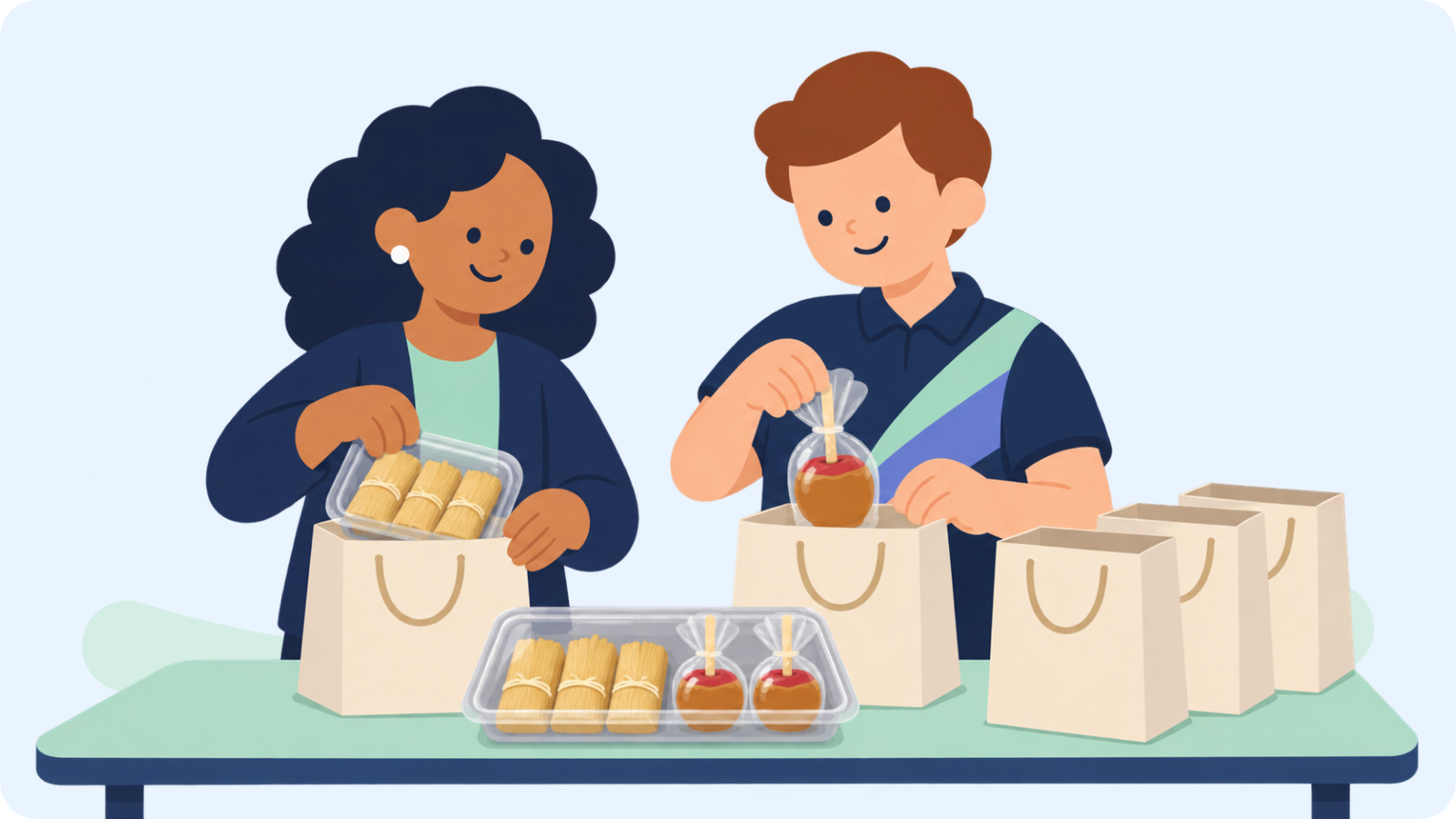
Tamales for a family dinner. Caramel apples for a fall treat. A pot of mums for the front porch. A product fundraiser gives supporters something they can use or enjoy while helping your program.
For a band, choir, school group, or booster club, choosing the product is only part of the decision. You also need to know what each sale contributes, when orders will arrive, and who will get them to buyers.
Here are 12 product fundraising ideas, with real examples and the planning detail to settle before you start selling.
The examples below come from real SimpleRaise customer records reviewed on November 20, 2026. We identify only the state. Dollar figures are rounded gross receipts from successful orders, including any added donations, before product costs, fees, and refunds. They describe selected product listings, not necessarily an entire fundraiser or the amount the group kept.
Food and drink fundraisers
1. Tamales and salsa
Real example: A Texas group recorded about $8,100 from a tamale-and-salsa offering.
Work with a local supplier to offer tamales by the dozen, with a small selection of fillings. Salsa can be an optional addition if the supplier offers it.
Choose the order deadline and pickup date before promoting the sale. Make the package size and flavor clear on every order. If families will deliver purchases to their own supporters, explain where and when they collect them.
Plan first: Confirm the supplier’s minimum order, preparation instructions, and storage requirements.
2. Caramel apples
Real example: A Nevada group recorded about $5,300 from caramel apple sales.
Caramel apples give supporters a seasonal treat or gift. You can offer a few toppings without creating an overwhelming menu.
Preorders let you collect buyers’ choices before placing the supplier order. Decide whether supporters will pick up from the supplier or from your group, and include that location in the ordering instructions.
Plan first: Get ingredient and allergen information from the supplier, along with the pickup and storage requirements.
3. Pasta and pizza kits
Real example: A Pennsylvania group recorded about $900 from a pasta-and-pizza-kit offering.
Meal kits give families something to make at home. Explore a partnership with a local food business or a culinary program that is able to supply the sale.
Describe exactly what comes in each kit, what the buyer needs to add, and how many servings it is intended to make. A photo of the actual contents can help answer questions before someone orders.
Plan first: Agree on production capacity and fulfillment responsibilities before accepting orders.
4. Coffee
Real example: An Ohio group recorded about $5,100 from a coffee offering.
Coffee can suit supporters who would rather buy an everyday item than a seasonal gift. Ask a supplier about available sizes, whole-bean and ground options, and how orders are fulfilled.
Keep the first sale’s selection manageable. A smaller menu is easier to explain and sort than a long list of blends, flavors, and sizes.
Plan first: Confirm whether the supplier ships to buyers or sends one delivery for your group to distribute.
5. Concert gift bouquets
Real example: An Arkansas group recorded about $1,300 from cookie bouquets offered around a performance.
Flowers, wrapped candy, or cookie bouquets can give families a way to congratulate a performer while supporting the program.
Take preorders for collection around a concert or show. Keep the buyer’s name separate from the performer’s name so volunteers know who is collecting each order. Choose a pickup location that will not crowd the entrance.
Plan first: Assign someone to manage pickup while other volunteers handle the performance.
6. Bakery redemption cards
Real example: A Virginia group recorded about $2,500 from bakery redemption cards.
A bakery card lets a supporter purchase a treat they can redeem later, instead of collecting fresh food on one busy distribution day.
Ask a local bakery whether it offers a fundraising arrangement. State what the card buys, where it can be used, and any restrictions before supporters purchase it.
Plan first: Confirm redemption terms, expiration dates, and what happens if a card is lost.
Seasonal and household fundraisers
7. Poinsettias
Real example: An Oklahoma group recorded about $3,600 from poinsettia sales.
Poinsettias are an option for a holiday sale. Buyers need to know the plant size, available colors, price, and pickup date.
Work backward from the supplier’s delivery schedule. Allow space to receive and sort plants, and tell supporters what to do if they cannot make the collection window.
Plan first: Confirm the supplier’s order deadline and care requirements. Do not promise colors or sizes that have not been reserved.
8. Fall mums
Real example: A Kansas group recorded about $2,400 from a fall mum sale.
Mums offer a fall alternative to holiday plants. A clear photo and pot size help supporters understand what they are ordering.
Arrange the handoff before opening the sale. Plants take up space, and volunteers need a way to match each buyer with the right quantity and color.
Plan first: Decide how substitutions will be handled if a requested color becomes unavailable.
9. Mulch
Real example: A Florida group recorded about $4,200 from a mulch offering.
A mulch sale combines a useful yard product with a substantial distribution job. You can offer pickup, delivery, or both, depending on the people and vehicles available.
State the bag size and mulch type clearly. If you offer delivery, define the service area and minimum order. Treat spreading mulch as a separate service unless your group has deliberately included it.
Plan first: Set delivery capacity before making promises to buyers. Include vehicle costs and any delivery supplies in the budget.
10. Laundry detergent
Real example: One bulk-detergent option offered by an Indiana group recorded about $1,900. That figure covers one product, not its full detergent sale.
Laundry detergent is another option for supporters who prefer a household purchase. Bulk containers, smaller packages, and other cleaning products create different storage and transport needs.
Use the supplier’s actual product descriptions and package sizes. Make sure buyers know whether a pump or other accessory is included.
Plan first: Arrange unloading and pickup for heavy containers. Avoid making brand-equivalence claims you cannot verify.
11. School or performance ornaments
Real example: An Ohio group recorded about $1,800 from a holiday ornament offering.
An ornament can mark a school year, concert season, or production. Share an approved design before taking orders, with the size and material clearly described.
Preorders can help you decide how many to purchase. If the supplier has a minimum quantity, calculate what happens if orders fall short before committing to the sale.
Plan first: Leave time for a design proof and corrections before production.
12. Yard signs
Real example: An Ohio group recorded about $800 from a yard-sign offering.
Yard signs let families show support for a school or program. A standard design keeps ordering straightforward; personalized signs require more review.
If buyers can add a name or other text, show how that information will appear and give them a chance to check it. Clarify whether the price includes a stake.
Plan first: Set a firm proof-approval deadline and a process for correcting mistakes.
Choose a fundraiser your group can deliver
Start with the volunteer work each idea creates:
| Your group can manage… | Ideas to consider | Question to settle |
|---|---|---|
| One scheduled food pickup | Tamales, caramel apples, pasta kits | Who handles storage and unclaimed orders? |
| Distribution around a performance | Gift bouquets, ornaments | Can pickup run without disrupting the event? |
| Bulky orders and vehicle loading | Mulch, detergent, plants | Do you have enough space, vehicles, and help? |
| Design proofs and personalization | Yard signs, ornaments | Who checks and approves every design? |
| Distributing cards rather than food | Bakery redemption cards | Are the redemption terms clear to buyers? |
| Sorting packages or arranging shipping | Coffee | Who fulfills each order, and what does it cost? |
Ask a few likely supporters what they would buy before committing to a supplier minimum. Then choose a manageable selection and one clear ordering process.
Work out what the sale will contribute
The customer examples above show recorded gross receipts, not profit. Sales revenue is not the amount your program keeps. Subtract the product cost and the other expenses your group must cover.
For example, suppose you sell 100 items for $20 each. That produces $2,000 in sales. If the items cost $12 each and other expenses total $150, the amount left is $650.
That is an illustration, not an expected result. Your calculation should include shipping, packaging, payment costs, delivery expenses, and any refunds or unsold stock that apply.
Also confirm when you must pay the supplier. Collecting preorders does not automatically mean your group can wait until after the sale to pay.
Give supporters a complete set of instructions
Before you share the fundraiser, make sure someone can answer these questions from the ordering page or form:
- What am I buying, and how much is included?
- What does it cost?
- When do orders close?
- When and where will I receive it?
- Can someone else collect my order?
- Who should I contact about a mistake or missed pickup?
Confirm your group’s approvals and the supplier’s requirements before taking orders. For food, get the handling and ingredient information needed for your planned sale.
Choose one product, make the costs clear, and organize the handoff before asking families to share it. That gives supporters a clear offer and gives volunteers a plan they can carry out.